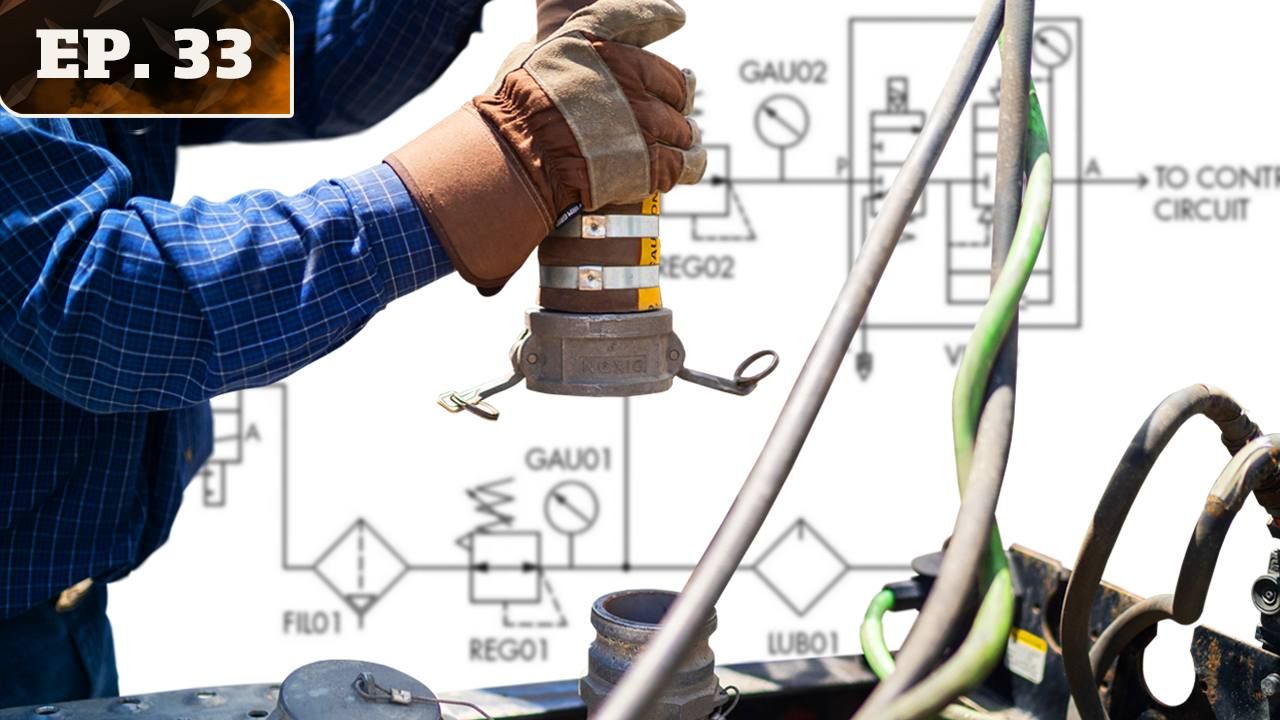
Trucking Up History: The Science of Pneumatic Hauling
Released 09/23/2026
Ready to play
00:00 / 00:00
00:0000:00
Episode description
Pneumatic hauling did not appear overnight, and the trailer you back into a loading bay today is the result of more than a century of engineering evolution that most drivers never think about. In Episode 33 of Always Pneumatic, Never Static, host Marcus dives deep into the science and history of pneumatic hauling. Where did the technology come from? How did the pressure and airflow systems that move concrete, cement, fly ash, lime, limestone, quicklime, flour, plastic pellets, and food-grade products evolve into the precision equipment running today? What separates a great pneumatic driver from an average one when it comes to understanding the science behind the haul? This is the most comprehensive history lesson the Trucking Up History series has produced, and it is built specifically for the drivers running this equipment every day. Whether you are six months into your first pneumatic route or fifteen years deep, this episode will change how you think about what is happening inside that trailer. New episodes every Wednesday at podcast.bulktransit.com.
Listen on
Show Highlights
Key moments and takeaways from this episode.
About This Episode
This week on Always Pneumatic, Never Static, the Trucking Up History series returns with its most ambitious episode yet. No guests, no roundtable, no tangents. Just a fully scripted, documentary-style deep dive into the science and history of the pneumatic trailer from the very beginning. Host Marcus covers more than 150 years of engineering, discovery, and industrial evolution to answer a question that every pneumatic driver has probably never thought to ask. How did anyone figure out that air could move tons of solid material through a pipe in the first place? This is Episode 33, and it is the most comprehensive thing this podcast has ever produced.
Episode Highlights
Chapter 1: When Air Learned to Move Things
The story begins in the mid-1800s when grain was first pneumatically unloaded from ships in European ports including London, Rotterdam, Hamburg and Saint Petersburg. Industrial pneumatic conveying was documented as early as 1856. The key breakthrough came in 1859 when brothers Philander and Francis Roots patented the Roots blower, a positive displacement device that could move substantial volumes of air and create pressure difference. That pressure difference is where the story really starts. But the critical science is not just pressure. It is drag force. Gas moving relative to a particle exerts force on that particle. That force depends on particle size, shape, density, and the relative velocity of the air. A speck of flour and a piece of rock interact with the same airstream in completely different ways. That simple fact drives everything that comes after it.
Chapter 2: From Grain to Coal to Cement
By the early 20th century engineers were formally studying what happened when solids and air traveled together through pipes. The bigger development came from pulverized coal. Moving coal dust mechanically created dust, fire, and explosion hazards. Engineer Alonzo G. Kenyon working with the Fuller Lehigh Company developed what became the Fuller Kenyon pump around 1918 and patented in 1919, specifically to pneumatically convey pulverized fuel through enclosed pipes rather than exposed mechanical conveyors. Cement manufacturers immediately recognized the possibilities. During construction of Hoover Dam, Fuller Kenyon pumps were used to unload and convey cement into storage silos at the project's blending plant. The DNA of the modern pneumatic trailer was now present. Dry powder, compressed air, a closed vessel, a pipeline, and a storage silo.
Chapter 3: How Do You Make a Solid Act Like a Liquid?
This is where pneumatic trailers get genuinely strange. The answer is fluidization. Introduce air into a bed of sufficiently fine particles in the right way and the particles separate slightly from one another. Friction between neighboring particles decreases. The bulk material begins exhibiting liquid-like behavior. It does not become a liquid. The particles are still solid. But collectively the bed starts to flow. This is why aeration is such a critical part of pneumatic trailer design. Air introduced around the bottom of a hopper loosens the product and encourages it toward the discharge outlet. The cones underneath a pneumatic trailer exist because gravity works alongside the pneumatic system. Sloped walls move material toward the bottom outlet. Aeration helps it flow. Pressure establishes the conditions for discharge. Moving air transfers momentum to the particles. A modern pneumatic unloading system is a carefully controlled argument between gravity, friction, pressure, and airflow.
Chapter 4: The Road to the Modern Pneumatic Trailer
Dry bulk trucking existed before pneumatic trailers. Early systems included dump trucks and gravity discharge hoppers. World War Two and the postwar period brought auger trailers that moved material toward the rear of the trailer for discharge. Then someone combined aeration concepts with pressure vessel technology. The 1961 technical paper that serves as a key historical source points to the oil well cementing industry as the most important ancestor of the highway pneumatic trailer. Small pressure vessels were used to transport bulk cement to oil field locations. Those vessels used aeration to fluidize the cement, a tilted discharge design, and additional air mixed with the product so it could travel through hose or pipe. Engineers started scaling those designs up. A Swiss patent with priority dating to 1954 describes a truck for pneumatically unloading dry bulk goods. By the late 1950s the modern pneumatic trailer concept was taking shape.
Chapter 5: The Interstate Highway Moment
The Interstate Highway Act of 1956 and the postwar construction boom created the conditions the pneumatic trailer was built for. Enormous quantities of cement, fly ash, and other dry bulk materials needed to move efficiently across the country. The pneumatic trailer arrived at exactly the right moment. By the early 1960s the technology had demonstrated something revolutionary. The truck did not have to simply carry the product. The truck could become part of the manufacturing and distribution process itself.
Chapter 6: The Pneumatic Trailer Becomes a Multi-Tool
Cement helped popularize the pneumatic trailer but the technology was never married to cement. Carriers began hauling foundry sand, flour, lime, limestone, mineral products, feed ingredients, chemicals, plastics, and countless other dry bulk commodities. That expansion created a difficult engineering problem. Dry bulk products may all look like powder to the untrained eye but they behave completely differently. Particle size matters. Particle shape matters. Density matters. Moisture matters. How easily the product absorbs air matters. How quickly it releases that air matters. How abrasive it is matters. How fragile it is matters. Even static electricity can matter. This is why experienced pneumatic drivers learn that two products hauled in essentially the same trailer can unload very differently.
Chapter 7: Dilute Phase, Dense Phase, and the Science Inside the Hose
Two terms appear constantly in pneumatic conveying. Dilute phase and dense phase. In dilute phase conveying particles are suspended in a relatively fast moving stream of air. Think of it like dust in a strong wind. Dense phase moves much more material relative to the amount of gas at lower velocity, sometimes as moving beds, dunes, plugs, or slugs. The critical concept is siltation velocity. As long as air moves fast enough particles remain entrained. Slow the air down and gravity wins. Particles fall out of suspension and accumulate along the bottom of the pipe. Enough accumulation and the system plugs. But high velocity has consequences too. Higher velocity increases wear as abrasive particles strike pipe elbows repeatedly. It can damage fragile products. And producing compressed air requires energy. Pneumatic conveying is not about maximum airflow. It is about the right airflow for that specific product and system.
Chapter 8: Why Tank Pressure and Line Pressure Are Not the Same Thing
Tank pressure is the pressure generated inside the hopper or vessel. Line pressure measures what is happening in the discharge system. Tank pressure generally needs to exceed line pressure for product to discharge effectively. If the downstream system becomes increasingly restrictive, line pressure climbs. That signal tells an experienced operator that something is happening. Product could be building up. Airflow may be inadequate for the solids loading. A valve position could be wrong. The receiving system could be presenting excessive resistance. The hose could have a partial obstruction. These are not abstract engineering concepts. They are exactly what pneumatic drivers are reading every time they watch those gauges during an unload.
Chapter 9 through 12: Equipment, Blowers, Valves and Modern Engineering
The episode covers the evolution of the equipment itself including the development of modern blower technology descended from the original Roots design, the role of valves in managing product flow and system pressure, how trailer manufacturers have refined hopper geometry and aeration systems over decades, and how computational modeling and instrumentation have changed the way engineers design and optimize pneumatic conveying systems while acknowledging that the material itself still gets a vote in how any given unload actually goes.
Chapter 13: The Driver Becomes Part of the Science
This may be the most overlooked part of the pneumatic trailer's history. The technology did not eliminate the operator. It changed what the operator had to understand. A driver hauling dry freight is generally not responsible for physically moving product from the trailer into the customer's warehouse. A pneumatic driver frequently arrives carrying not only the product but a major portion of the equipment necessary to transfer that product into the customer's storage system. The tractor supplies power. The blower moves air. The trailer manages pressure and product. The hoses become the pipeline. The customer system completes the circuit. And the driver orchestrates all of it. Drivers learn that products have personalities. Flour does not behave exactly like cement. Cement does not behave exactly like limestone. Limestone does not behave exactly like pellets. One load may want more aeration. Another may be sensitive to excessive velocity. The physics has not changed but the conditions have. A good pneumatic operator learns to recognize those changes before they become a problem. In that sense today's driver is doing the same thing engineers have been doing since the 19th century. Watching, listening, adjusting, and learning how solids and air behave together.
From The Host
“The pneumatic trailer is one of those machines that has become so normal in trucking that it is easy to overlook how extraordinary it actually is. It is a mobile material handling plant. A pressure vessel traveling 70 miles per hour. A machine capable of turning air into a conveyor. And every time one unloads it is putting more than 150 years of experimentation to work. From 19th century grain ships to pulverized coal to cement plants to the interstate highway system to the pneumatic trailers rolling behind Bulk Transit tractors today. The basic challenge has remained remarkably consistent through all of it. Take something heavy. Take something solid. And convince it to ride the wind.” — Marcus Bridges, Host
Transcript
Expand to read the full episode transcript.
1
00:00:00,280 --> 00:00:06,200
How's it going out there? Bulk and Spur. Welcome into a very special presentation of trucking up
2
00:00:06,200 --> 00:00:12,600
history presented by Bulk Transit. Now, on today's show, we will bring you a documentary
3
00:00:12,600 --> 00:00:19,119
style episode that talks about the comprehensive history and science behind the
4
00:00:19,120 --> 00:00:25,680
pneumatic trailer. So check your airlines and top off the tank as we jump in to this episode of
5
00:00:25,680 --> 00:00:32,560
Trucking Up History. You are listening to Always Pneumatic, Never Static,
6
00:00:32,600 --> 00:00:37,880
the Totally Pressurized podcast brought to you by Bulk Transit, where we keep the lines clear, the
7
00:00:37,880 --> 00:00:43,200
tanks empty, and the conversation anything but dry. Whether you're running powder pellets or anything
8
00:00:43,200 --> 00:00:47,120
in between. Pull up a seat, crack the windows, and let's hit it.
9
00:00:50,600 --> 00:00:56,720
There are machines that look complicated, and then there are machines that hide their complexity
10
00:00:56,760 --> 00:01:03,709
remarkably well. A pneumatic trailer belongs firmly in that second category. Look
11
00:01:03,750 --> 00:01:09,269
at one sitting in a yard. At a first glance, there isn't much mystery to it. You've got a big
12
00:01:09,269 --> 00:01:15,829
aluminum vessel, a few cones underneath it, pipes, valves, hoses, a blower hooked to a
13
00:01:15,830 --> 00:01:22,509
truck, put dry product in the top. Connect a hose at the customer, turn on the air. Product comes
14
00:01:22,510 --> 00:01:29,349
out simple. Except it isn't, because inside that trailer you're asking air to do
15
00:01:29,349 --> 00:01:35,470
something that seems almost ridiculous when you really think about it. You're asking air to move
16
00:01:35,470 --> 00:01:42,230
tons of solid material through a pipe cement, flour, limestone, fly ash,
17
00:01:42,269 --> 00:01:49,029
plastic pellets, powdered chemicals, feed ingredients. Products that normally sit obediently
18
00:01:49,030 --> 00:01:55,910
in a pile suddenly begin behaving almost like a liquid. They move down through the trailer, enter a
19
00:01:55,910 --> 00:02:02,449
pipe, and travel through bends, hoses and vertical runs until they arrive inside a silo that might
20
00:02:02,489 --> 00:02:08,649
tower dozens of feet above the truck. There's no conveyor belt running that hose. There's no auger
21
00:02:08,649 --> 00:02:14,929
reaching from the trailer to the silo. There isn't a pump pushing liquid. There is air,
22
00:02:15,009 --> 00:02:21,809
and behind that air is more than a century of engineering. Actually, the story
23
00:02:21,809 --> 00:02:28,689
begins even earlier than that. Because before anybody built a pneumatic trailer, engineers first
24
00:02:28,689 --> 00:02:35,209
had to discover that air could be used to transport solids at all. And that story takes us
25
00:02:35,210 --> 00:02:42,049
back to the middle of the 19th century. Chapter one. When air learned to
26
00:02:42,089 --> 00:02:48,249
move things, human beings understood compressed air. Long before they understood, pneumatic
27
00:02:48,249 --> 00:02:54,529
conveying bellows had been used for centuries. Vacuum pumps appeared in Europe in the
28
00:02:54,529 --> 00:03:01,479
1600s. Compressors continued developing through the 18th and 19th centuries, but moving a
29
00:03:01,480 --> 00:03:08,160
solid material through a pipe using air was a different problem entirely. One historical review,
30
00:03:08,160 --> 00:03:14,639
published in KKona Power and Particle journal traces documented industrial pneumatic conveying
31
00:03:14,640 --> 00:03:21,490
back to the mid 1800s. Grain was reportedly pneumatically unloaded from ships between
32
00:03:21,490 --> 00:03:28,440
1856 and 1876, in ports including London, Rotterdam, Hamburg and what
33
00:03:28,440 --> 00:03:35,279
was then Saint Petersburg or later Leningrad. An image from 1882 shows grain being
34
00:03:35,280 --> 00:03:41,679
handled pneumatically aboard a Russian ship. Think about what problem those early systems were
35
00:03:41,680 --> 00:03:48,440
trying to solve. A ship arrives carrying grain. Grain is very heavy. There is
36
00:03:48,440 --> 00:03:54,959
an enormous amount of it, and somebody has to get it out of the ship. The traditional answer
37
00:03:54,960 --> 00:04:00,710
involved manpower and mechanical handling equipment. But what if you could essentially build
38
00:04:00,710 --> 00:04:07,070
an enormous vacuum cleaner? Put a pipe into that grain, move enough air through that pipe, and
39
00:04:07,070 --> 00:04:13,390
suddenly individual kernels of grain become passengers in an airstream. One
40
00:04:13,390 --> 00:04:20,229
technological development helped make that idea increasingly practical. In 1859,
41
00:04:20,230 --> 00:04:26,389
brothers Philander and Francis Rootes patented what became known as the roots blower.
42
00:04:27,230 --> 00:04:32,669
The roots blower is important to our story because descendants of that basic positive
43
00:04:32,670 --> 00:04:39,109
displacement blower concept remain familiar equipment in pneumatic conveying. Today, the
44
00:04:39,109 --> 00:04:43,429
historical review from the University of Pittsburgh's George Cleansing identifies
45
00:04:43,429 --> 00:04:49,589
development of the roots blower as a major turning point in pneumatic conveying. The blower
46
00:04:49,589 --> 00:04:56,328
does something extremely useful. Instead of merely stirring air around it can move a substantial
47
00:04:56,329 --> 00:05:02,129
volume of air and create a pressure difference. And pressure difference is the beginning of our
48
00:05:02,129 --> 00:05:08,609
story. But it isn't the whole story. Because here's our first important piece of pneumatic
49
00:05:08,649 --> 00:05:14,209
trailer science. Pressure does not magically push the product through the hose.
50
00:05:14,570 --> 00:05:21,529
Ultimately, the product moves because flowing air exerts force on particles. The
51
00:05:21,530 --> 00:05:27,529
American Institute of Chemical Engineers explains that the critical physical mechanism is drag
52
00:05:27,530 --> 00:05:34,369
force. Gas moving relative to a particle exerts force on that particle, and that force
53
00:05:34,369 --> 00:05:41,249
depends on factors including gas density, particle size, and shape, and especially the relative
54
00:05:41,249 --> 00:05:48,209
velocity of the air. That's why you can blow a speck of flour across a countertop much more
55
00:05:48,209 --> 00:05:54,839
easily than you can blow a rock across the same countertop. The air is interacting with both, but
56
00:05:54,839 --> 00:06:01,639
the particles are very different, and that simple fact becomes incredibly important later, because a
57
00:06:01,640 --> 00:06:07,479
pneumatic system that handles flower beautifully may behave very differently with pellets, cement,
58
00:06:07,480 --> 00:06:12,879
or another mineral product. The material matters a lot.
59
00:06:14,480 --> 00:06:21,279
Chapter two. From grain to coal to cement. By the early 20th century, engineers were
60
00:06:21,280 --> 00:06:26,759
beginning to seriously study what happened when solids and air traveled together through pipes.
61
00:06:27,280 --> 00:06:34,040
Research in Germany in 1924 examined pressure drop and solids flow in pneumatic conveying
62
00:06:34,040 --> 00:06:39,799
systems. According to the historical review of the field, this was among the earliest formal
63
00:06:39,799 --> 00:06:45,440
technical investigations of pneumatic conveying behavior. But another major development was
64
00:06:45,440 --> 00:06:51,540
already happening in American industry, and it involved something far more dangerous than grain.
65
00:06:52,019 --> 00:06:59,019
Pulverized coal. Coal could be ground down into a fine powder and used efficiently as fuel, but
66
00:06:59,019 --> 00:07:05,500
moving that powder mechanically created serious problems. Dust.
67
00:07:05,540 --> 00:07:12,220
Fire. Explosion hazards. An engineer named Alonzo G. Kenyon, working with the
68
00:07:12,220 --> 00:07:17,459
Fuller Lehigh Company, developed a machine specifically intended to pneumatically convey
69
00:07:17,459 --> 00:07:23,979
pulverized material. The first prototype of what became the Fuller Kenyon pump was built around
70
00:07:23,980 --> 00:07:30,699
1918, with the design adopted the following year. The modern manufacturer traces the original
71
00:07:30,700 --> 00:07:37,099
design to 1919, and says it was developed specifically in response to the hazards involved
72
00:07:37,099 --> 00:07:43,700
in moving pulverized fuel. The idea was enormously important. Instead of dragging
73
00:07:43,700 --> 00:07:49,738
powder around a plant on exposed mechanical conveyors. Engineers could move material through
74
00:07:49,769 --> 00:07:56,289
enclosed pipes. The Fuller Kenyon system mixed pulverized material with air so that the
75
00:07:56,289 --> 00:08:02,768
material entered a fluidized condition and could be conveyed through piping and cement.
76
00:08:02,769 --> 00:08:08,689
Manufacturers quickly recognized the possibilities. That matters because cement would
77
00:08:08,690 --> 00:08:13,450
eventually become one of the forces that push pneumatic technology out of the stationary
78
00:08:13,489 --> 00:08:19,930
factory and onto the highway. The Hoover Dam provides an early example of just how useful
79
00:08:19,969 --> 00:08:26,889
pneumatic handling had become during construction of the dam. Enormous quantities of cement had to
80
00:08:26,890 --> 00:08:33,369
be received and moved into storage. Fuller Kenyon pumps were used to unload and convey cement into
81
00:08:33,409 --> 00:08:39,089
storage silos at the project's blending plant. We're still not talking about the pneumatic
82
00:08:39,090 --> 00:08:45,968
highway trailer we recognize today, but most of its DNA is now present dry powder,
83
00:08:45,969 --> 00:08:52,799
compressed air, a closed vessel, A pipeline and a storage silo. And the realization
84
00:08:52,800 --> 00:08:59,039
that under the right conditions, powder doesn't necessarily have to be carried mechanically. It
85
00:08:59,040 --> 00:09:05,719
can flow. Chapter three how do you make a solid act like a
86
00:09:05,719 --> 00:09:12,400
liquid? This is where pneumatic trailers start becoming genuinely strange. Take flour.
87
00:09:12,559 --> 00:09:19,359
Dump a pile of flour on a table. It doesn't flow like water. Take cement. Same thing. Take
88
00:09:19,360 --> 00:09:26,119
fine limestone, same thing. These are solid materials. Every individual particle
89
00:09:26,119 --> 00:09:32,959
obeys the laws of solid mechanics. But introduce air into a bed of sufficiently fine particles in
90
00:09:32,960 --> 00:09:39,199
the right way. And something fascinating begins happening. The particles separate slightly from
91
00:09:39,200 --> 00:09:45,039
one another. Friction between neighboring particles decreases. The bulk material becomes
92
00:09:45,039 --> 00:09:51,819
easier to move. Engineers call this process fluidized. It doesn't mean the material
93
00:09:51,859 --> 00:09:58,219
literally becomes a liquid. The particles are still solid, but collectively the bed can begin
94
00:09:58,219 --> 00:10:04,259
exhibiting liquid like behavior. This is why aeration is such an important part of many
95
00:10:04,259 --> 00:10:10,699
pneumatic trailer designs. Air introduced around the bottom of a hopper helps loosen the product
96
00:10:10,700 --> 00:10:17,699
and encourage it towards the discharge outlet. Historically, fabric aeration media were widely
97
00:10:17,699 --> 00:10:24,218
used. Air passed through the porous fabric into the powder above it. Later designs introduced
98
00:10:24,219 --> 00:10:29,658
different types of aerators or fluid risers, intended to reduce clogging and maintenance
99
00:10:29,659 --> 00:10:36,659
problems associated with the fabric media. And now the shape of the trailer begins to make some
100
00:10:36,659 --> 00:10:41,978
sense. Those cones underneath a pneumatic trailer aren't there because somebody thought they looked
101
00:10:41,979 --> 00:10:48,968
cool. Gravity is working alongside the pneumatic system. The sloped walls encouraged material
102
00:10:49,010 --> 00:10:55,489
towards the bottom outlet. Aeration helps the material flow. Pressure inside the vessel helps
103
00:10:55,489 --> 00:11:02,249
establish the conditions for discharge. Then the conveying air helps carry the material through
104
00:11:02,249 --> 00:11:09,089
the discharge line. In other words, the trailer is using several forces at once. Gravity
105
00:11:09,090 --> 00:11:15,609
gets the product towards the outlet. Aeration helps the bulk material flow. Pressure establishes
106
00:11:15,610 --> 00:11:20,809
the driving conditions, and moving air transfers the momentum to the particles and carries
107
00:11:20,809 --> 00:11:26,450
material through the line. A modern pneumatic unloading system is basically a carefully
108
00:11:26,450 --> 00:11:32,449
controlled argument between gravity, friction, pressure, and air flow, and if those forces
109
00:11:32,449 --> 00:11:39,329
cooperate. Unloading can look effortless when they don't cooperate, well, that's where the drivers
110
00:11:39,329 --> 00:11:44,959
earn their money. Chapter four The road to the modern Pneumatic trailer.
111
00:11:46,119 --> 00:11:52,679
Dry bulk trucking existed before pneumatic. Trailers, and especially valuable
112
00:11:52,719 --> 00:11:58,679
historical snapshot comes from a 1961 technical paper discussing pneumatic truck
113
00:11:58,680 --> 00:12:05,200
transportation. According to that account, bulk dry products had already been transported by truck in
114
00:12:05,200 --> 00:12:11,280
the United States for more than 30 years. Early systems included dump trucks and gravity
115
00:12:11,320 --> 00:12:17,840
discharge hoppers. During World War two and the postwar period, another popular trailer designed
116
00:12:17,840 --> 00:12:22,599
use an auger to move material toward the rear of the trailer, where it could be discharged into a
117
00:12:22,599 --> 00:12:29,439
customer's receiving hopper belt. Trailers offered another solution, and another design used
118
00:12:29,440 --> 00:12:35,039
low pressure air to fuze through porous fabric to help aerate dry material and encourage it towards
119
00:12:35,040 --> 00:12:41,399
the discharge. Then somebody combined those ideas with pressure vessel technology.
120
00:12:42,159 --> 00:12:48,779
The 1961 account points to the oil well cementing industry as an important ancestor of the highway
121
00:12:48,820 --> 00:12:55,499
pneumatic trailer. Small pressure vessels were used to transport bulk cement inside those early
122
00:12:55,499 --> 00:13:01,339
vessels. Aeration helped fluid ize the cement. The vessel could be tilted so the material moved down
123
00:13:01,340 --> 00:13:08,219
a relatively shallow slope toward a discharge point. Additional air was mixed with the cement so
124
00:13:08,219 --> 00:13:14,619
it could then travel through hose or pipe. There it is, the basic pneumatic trailer
125
00:13:14,620 --> 00:13:21,339
concept, except early versions were relatively small, so engineers started making them bigger.
126
00:13:21,780 --> 00:13:28,460
One step was joining vessels into a double tapered tank, feeding a common outlet. Then
127
00:13:28,460 --> 00:13:34,059
designers pursued configurations with multiple steep sided hoppers connected to a common
128
00:13:34,059 --> 00:13:40,739
discharge pipe. A Swiss patent with priority dating to 1954,
129
00:13:40,780 --> 00:13:46,449
describes a truck for carrying loose bolt goods and unloading them pneumatically, demonstrating
130
00:13:46,450 --> 00:13:52,489
how actively engineers were pursuing mobile pneumatic bulk transportation during this period.
131
00:13:52,489 --> 00:13:59,129
And then came the late 1950s. That's when pneumatic dry bulk trucking really
132
00:13:59,130 --> 00:14:06,089
began taking off in the United States. Chapter 51958. When the
133
00:14:06,090 --> 00:14:12,808
market catches up with the machine, technology doesn't spread simply because it works. It
134
00:14:12,809 --> 00:14:19,529
spreads when economics give people a reason to use it. For pneumatic trucking, cement provided
135
00:14:19,530 --> 00:14:26,369
that reason. The 1961 Butler Manufacturing paper identifies late 1958 as a
136
00:14:26,369 --> 00:14:32,770
turning point. American cement producers were facing excess production capacity and competition
137
00:14:32,770 --> 00:14:38,929
from imported cement. Distribution became increasingly important, and trucking offered
138
00:14:38,930 --> 00:14:45,709
manufacturers Flexibility. Pneumatic delivery offered something especially attractive. The
139
00:14:45,710 --> 00:14:52,229
trailer wasn't merely transportation. It was also part of the customer's material handling system.
140
00:14:52,669 --> 00:14:57,870
The truck could arrive, connect to the customer's piping, and transfer its load directly into
141
00:14:57,909 --> 00:15:04,749
storage. No bags. No army of workers unloading sacks. No separate portable
142
00:15:04,749 --> 00:15:11,109
conveyor required to get material from the truck into the silo. The truck had effectively become a
143
00:15:11,109 --> 00:15:17,390
shipping container with its own unloading system. According to the Butler paper, demand
144
00:15:17,390 --> 00:15:22,390
accelerated dramatically and a variety of pressure unloading trailer designs appeared on
145
00:15:22,390 --> 00:15:28,989
the market beginning around 1959. Government labor statistics showed just how dramatically cement
146
00:15:28,990 --> 00:15:35,630
distribution itself was changing. In 1958, approximately 79% of Portland
147
00:15:35,630 --> 00:15:42,259
cement shipments were already being made in bulk. By 1964, that figure had climbed above
148
00:15:42,260 --> 00:15:49,259
87%, and by 1961, trucks had overtaken other modes as the dominant means
149
00:15:49,259 --> 00:15:55,819
of shipping Portland cement. In 1964, trucks accounted for roughly 66% of
150
00:15:55,820 --> 00:16:01,980
shipments. The US Bureau of Labor Statistics specifically credited pneumatic handling with
151
00:16:01,980 --> 00:16:07,658
helping make increased bulk shipment possible, while reducing manual labor associated with
152
00:16:07,659 --> 00:16:14,459
unloading and loading. The Interstate Highway System was simultaneously expanding. The
153
00:16:14,460 --> 00:16:20,579
Federal Aid Highway Act of 1956 helped unleash one of the largest road building programs in
154
00:16:20,580 --> 00:16:27,339
American history. Roads needed concrete. Concrete needed. Cement and cement needed.
155
00:16:27,380 --> 00:16:34,299
Transportation company specializing in bulk hauling grew rapidly during this era. Sherman
156
00:16:34,300 --> 00:16:40,049
Trucking, for example, expanded aggressively during the 1950s, as construction and highway development
157
00:16:40,049 --> 00:16:45,409
increased demand for cement transportation, the company became an early user of dry bulk
158
00:16:45,409 --> 00:16:52,129
equipment developed by Hale, whose basic super jet dry bulk design emerged during this period.
159
00:16:52,530 --> 00:16:58,770
The modern pneumatic trailer had found its movement, and once trucking companies proved they
160
00:16:58,770 --> 00:17:03,969
could move cement this way. Another question became obvious what else can we put in one of
161
00:17:03,969 --> 00:17:10,889
these things? The answer turned out to be a lot. Chapter six.
162
00:17:10,930 --> 00:17:17,689
The pneumatic trailer becomes a multi-tool. Cement may have helped popularize the pneumatic trailer,
163
00:17:17,689 --> 00:17:24,329
but the technology wasn't married to cement. Carriers began hauling foundry sand, flour,
164
00:17:24,370 --> 00:17:31,209
lime, mineral products, feed ingredients, chemicals, plastics, and countless other dry bolt
165
00:17:31,209 --> 00:17:38,109
commodities. That expansion created a difficult engineering problem because dry bulk products may
166
00:17:38,109 --> 00:17:44,749
all look like powder or little pieces of stuff to the untrained eye. Scientifically, though, they can
167
00:17:44,749 --> 00:17:51,228
behave completely differently. Particle size matters. Particle shape matters. Density
168
00:17:51,229 --> 00:17:58,149
matters. Moisture matters. How easily the product absorbs air matters how quickly it
169
00:17:58,189 --> 00:18:04,669
releases that air matters. How abrasive it is matters how fragile it
170
00:18:04,670 --> 00:18:11,189
is. Matters. Even static electricity can matter. This is why
171
00:18:11,230 --> 00:18:15,909
experienced pneumatic drivers learn that two products hauled in essentially the same trailer
172
00:18:15,909 --> 00:18:22,269
can unload very differently. Modern engineering guidance emphasizes exactly this
173
00:18:22,270 --> 00:18:27,749
point. Understanding the characteristics of the material is one of the most important steps in
174
00:18:27,749 --> 00:18:34,629
designing a pneumatic conveying system. Consider flour and limestone
175
00:18:35,019 --> 00:18:41,819
fine flower can retain air and become extremely fluidized. A mineral product may be denser or more
176
00:18:41,819 --> 00:18:48,379
abrasive. Plastic pellets are larger particles entirely. Push fragile material to
177
00:18:48,420 --> 00:18:54,499
aggressively and you can damage it. Move abrasive material too fast and you can wear out elbows and
178
00:18:54,500 --> 00:19:00,498
piping. Introduce moisture into certain powders and suddenly a product that should flow freely
179
00:19:00,499 --> 00:19:07,180
can cake or plug. So despite appearances, the pneumatic trailer isn't really transporting one
180
00:19:07,180 --> 00:19:14,019
substance. It's transporting to simultaneously the product and the air. Which
181
00:19:14,020 --> 00:19:20,579
means the driver is managing a two phase flow system. Chapter
182
00:19:20,579 --> 00:19:27,419
seven dilute phase, dense phase and the Science. Inside the hose. There are two
183
00:19:27,420 --> 00:19:33,968
terms you'll hear constantly in pneumatic conveying dilute phase and dense phase. The
184
00:19:33,969 --> 00:19:39,169
simplest way to understand them is to imagine how product is occupying the pipe, compared with how
185
00:19:39,169 --> 00:19:45,329
much air is moving through it. In dilute phase, conveying particles are generally suspended in a
186
00:19:45,329 --> 00:19:51,489
relatively fast moving stream of air. Think of it like dust in a strong, wind
187
00:19:51,849 --> 00:19:58,129
dense phase, conveying moves much more material relative to the amount of gas, generally at lower
188
00:19:58,129 --> 00:20:05,009
velocity. Sometimes as moving beds, dunes, plugs, or slugs, depending on the material
189
00:20:05,010 --> 00:20:11,809
and the system. AIC describes dilute phase conveying as operating above what's called
190
00:20:11,849 --> 00:20:18,688
the siltation velocity. Siltation velocity is an important concept. Imagine
191
00:20:18,689 --> 00:20:24,769
material moving through a horizontal pipe. As long as the air is moving fast enough, particles remain
192
00:20:24,770 --> 00:20:31,689
in trained. Start slowing the air down and eventually gravity wins. Particles begin falling
193
00:20:31,689 --> 00:20:37,868
out of the suspension and accumulating along the bottom of the pipe. That threshold is associated
194
00:20:37,869 --> 00:20:44,228
with siltation, and once enough material settles, the system can become unstable or
195
00:20:44,229 --> 00:20:50,789
plug. So why not simply crank up the airflow as high as possible? Well, because velocity has
196
00:20:50,789 --> 00:20:57,709
consequences. Higher velocity can increase where? Imagine blasting abrasive
197
00:20:57,709 --> 00:21:04,109
mineral particles into a pipe elbow. Thousands upon thousands of times. Those particles don't
198
00:21:04,109 --> 00:21:11,108
politely negotiate the turn. They strike the piping again and again and again. Higher
199
00:21:11,109 --> 00:21:17,589
velocities can also damage fragile products. And producing compressed air requires energy.
200
00:21:17,630 --> 00:21:23,869
So pneumatic conveying isn't about creating the maximum possible airflow. It's about creating the
201
00:21:23,870 --> 00:21:30,819
right airflow for that product and that system. Atlas Copco gives a typical Industrial
202
00:21:30,819 --> 00:21:37,619
dilute phase velocity of approximately 18 to 35m/s. While dense phase systems
203
00:21:37,619 --> 00:21:44,499
may operate closer to 3 to 10m/s, although actual systems vary widely by product
204
00:21:44,500 --> 00:21:50,859
and application. That brings us to another major enemy pressure
205
00:21:50,859 --> 00:21:57,098
drop air moving through a pipe loses pressure because of friction. Add product and the situation
206
00:21:57,099 --> 00:22:03,660
becomes more complicated. Add a bend, more resistance. Add another bend. More
207
00:22:03,660 --> 00:22:10,100
resistance. Run vertically. More energy is required to lift material against gravity. Increase the
208
00:22:10,100 --> 00:22:16,699
conveying distance. More resistance. Change hose diameter. Change particle loading. Change air
209
00:22:16,699 --> 00:22:23,539
velocity. Everything interacts. This is why a driver can unload beautifully at one
210
00:22:23,540 --> 00:22:27,979
customer, and then take the same product to another facility and discover that the system
211
00:22:27,979 --> 00:22:34,400
behaves differently. The receiving system is part of the equation. The length of the customer's pipe
212
00:22:34,400 --> 00:22:41,359
matters. The diameter of that pipe matters. The bends in that pipe matter. The vertical rise in
213
00:22:41,400 --> 00:22:47,799
that pipe matters. The condition of the piping matters. The silo and filtration systems matter.
214
00:22:47,920 --> 00:22:54,919
The trailer is only one part of a much larger pneumatic conveying system. Chapter eight.
215
00:22:55,119 --> 00:23:01,599
Why tank pressure and line pressure are not the same thing. This brings us directly to something
216
00:23:01,599 --> 00:23:08,279
pneumatic drivers watch constantly tank pressure and line pressure. Those
217
00:23:08,280 --> 00:23:13,319
gauges aren't showing redundant information. They're showing what's happening in different
218
00:23:13,319 --> 00:23:19,759
parts of the system. A modern pneumatic trailer operating manual from Biel describes tank
219
00:23:19,759 --> 00:23:26,399
pressure as pressure generated inside the hopper or vessel, while line pressure measures pressure
220
00:23:26,400 --> 00:23:32,949
in the discharge System critically. Tank pressure generally needs to exceed line pressure for
221
00:23:32,949 --> 00:23:38,629
product to discharge effectively. Think of the pressure difference as part of what establishes
222
00:23:38,630 --> 00:23:44,909
the driving force moving product from one environment to another. If the downstream system
223
00:23:44,910 --> 00:23:51,068
becomes increasingly restrictive, line pressure can climb. That may be telling the operator
224
00:23:51,069 --> 00:23:57,829
something product could be building up. Airflow may be inadequate for the solids. Loading a valve
225
00:23:57,829 --> 00:24:04,269
position could be wrong. The receiving system could be presenting excessive resistance. The hose
226
00:24:04,269 --> 00:24:09,709
could be restricted. This is why pneumatic unloading is not a turn it on and walk away
227
00:24:09,709 --> 00:24:16,429
process. The gauges are always telling a story and an experienced driver learns to read
228
00:24:16,430 --> 00:24:23,309
it. Pressure. Sound. Hose movement. Blower behavior. Unloading rate. Valve
229
00:24:23,349 --> 00:24:30,259
position. Product characteristics. The machine is constantly giving feedback long before
230
00:24:30,260 --> 00:24:36,099
computerized sensors became common. The human being standing beside the trailer was the control
231
00:24:36,099 --> 00:24:43,098
system and in many ways, still is. Chapter nine Why
232
00:24:43,139 --> 00:24:49,299
Blowers get hot. There's another piece of physics pneumatic drivers experience firsthand.
233
00:24:49,819 --> 00:24:56,779
Heat compressing air generates heat that isn't a defect. It's thermodynamics.
234
00:24:56,899 --> 00:25:03,899
As a gas is compressed, work is performed on it and its temperature can rise substantially. Then
235
00:25:03,900 --> 00:25:08,659
the air moves through the piping toward the trailer and the discharge system. This matters for
236
00:25:08,660 --> 00:25:15,339
several reasons. Hot components create an obvious burn hazard, but temperature can also interact
237
00:25:15,339 --> 00:25:21,859
with the product and with moisture. Remember that atmospheric air contains water vapor. Changes in
238
00:25:21,859 --> 00:25:27,560
pressure and temperature can influence condensation, And water can be the enemy of dry
239
00:25:27,600 --> 00:25:34,079
bulk unloading. Fine powders that flow wonderfully when dry can become dramatically less cooperative
240
00:25:34,080 --> 00:25:39,439
when moisture is introduced. Food grade applications add another concern.
241
00:25:39,760 --> 00:25:46,560
Contamination. Pneumatic conveying air actually contracts the product. That's important.
242
00:25:46,599 --> 00:25:52,239
The air isn't merely pushing on the outside of a sealed bag, it becomes part of the conveying
243
00:25:52,240 --> 00:25:58,519
environment. Industry literature has long noted that contaminants entering through air systems,
244
00:25:58,520 --> 00:26:05,160
including microscopic debris or in inappropriate equipment lubricant contamination,
245
00:26:05,160 --> 00:26:11,079
can create serious problems when hauling food products, plastics, and other purity sensitive
246
00:26:11,079 --> 00:26:17,799
commodities. That's one reason food grade pneumatic work has its own procedures, filtration
247
00:26:17,800 --> 00:26:24,549
considerations, and cleanliness requirements. The same basic physics may move cement and
248
00:26:24,550 --> 00:26:29,669
flour. The acceptable operating environment absolutely isn't the same.
249
00:26:32,069 --> 00:26:38,829
Chapter ten why pneumatic trailers look the way they do. Now that we understand the
250
00:26:38,829 --> 00:26:45,469
science. Look at the trailer again. The shape suddenly becomes logical. The cylindrical vessel
251
00:26:45,470 --> 00:26:51,468
helps form a pressure capable structure. The cones underneath funnel material toward discharge
252
00:26:51,469 --> 00:26:57,670
points. Aerators or fluids help reduce internal friction and encourage product
253
00:26:57,670 --> 00:27:04,669
movement. The outlets feed a common discharge line. The blower supplies conveying air.
254
00:27:05,389 --> 00:27:12,069
Top air piping can introduce pressure into the vessel. Valves allow the operator to control
255
00:27:12,069 --> 00:27:19,030
where air goes and when product enters the line. Pressure gauges let the operator monitor what's
256
00:27:19,030 --> 00:27:25,819
happening. A pressure relief device protects against overpressure. Hoses connect the mobile
257
00:27:25,819 --> 00:27:32,180
system to the customer's permanent system, and manholes provide access for loading from above.
258
00:27:33,060 --> 00:27:39,299
Modern dry bulk trailers can vary enormously in capacity and configuration depending on the
259
00:27:39,300 --> 00:27:45,979
commodity. Some use a single hopper. Others use several different products. Demand different
260
00:27:45,980 --> 00:27:52,579
volumes because the important highway limitation isn't simply how many cubic feet fit inside, it's
261
00:27:52,579 --> 00:27:59,300
also weight. A lightweight product can fill the trailer before reaching maximum legal payload.
262
00:27:59,619 --> 00:28:06,299
A dense material can hit the weight limit while leaving plenty of unused volume. That is why a
263
00:28:06,300 --> 00:28:12,939
trailer optimized for one commodity may look very different from one design for another. And it is
264
00:28:12,939 --> 00:28:19,779
also why engineering a pneumatic trailer is a balancing act. More vessel structure can increase
265
00:28:19,779 --> 00:28:25,959
strength, but structure weighs something. Every additional pound of trailer is potentially one
266
00:28:25,959 --> 00:28:32,478
less pound of payload. Manufacturers therefore spend enormous effort optimizing vessel
267
00:28:32,479 --> 00:28:39,079
shape, aluminum construction, structural supports, plumbing and suspension arrangements.
268
00:28:39,640 --> 00:28:45,399
A pneumatic trailer must be light enough to earn money strong enough to survive the highway, and
269
00:28:45,400 --> 00:28:51,878
capable of becoming a pressure vessel every time it unloads. That is a remarkable
270
00:28:51,879 --> 00:28:58,879
combination of requirements. Chapter 11 The pressure vessel on wheels. This part
271
00:28:58,920 --> 00:29:04,240
deserves some emphasis. When a conventional pneumatic trailer's pressurized for unloading, the
272
00:29:04,240 --> 00:29:10,919
vessel itself is storing energy. Even seemingly modest pressure becomes significant when applied
273
00:29:10,919 --> 00:29:17,199
across a large surface area. That's why manufacturers establish a maximum allowable
274
00:29:17,199 --> 00:29:24,149
working pressure and why relief devices are critical components. The operating manual for Biel
275
00:29:24,150 --> 00:29:29,829
pneumatic trailers explicitly instructs operators to never exceed the working pressure shown on the
276
00:29:29,829 --> 00:29:34,630
trailer's serial plate, and identifies the pressure relief device as protection against
277
00:29:34,630 --> 00:29:41,509
overpressure, and this is an important place to clear up a common misconception. A pneumatic dry
278
00:29:41,550 --> 00:29:48,229
bulk trailer is not automatically the same thing as the Dot 406, 407, or
279
00:29:48,389 --> 00:29:55,349
412 specification cargo tanks associated with various regulated liquid hazardous materials.
280
00:29:56,150 --> 00:30:02,229
Those Dot specifications have their own construction, inspection and pressure requirements.
281
00:30:02,270 --> 00:30:07,829
For example, federal regulations specify different pressure test requirements for
282
00:30:07,830 --> 00:30:14,670
.406.407 and .412 cargo tanks. Dry bulk pneumatic
283
00:30:14,670 --> 00:30:20,088
equipment has to be considered according to its actual design commodity and applicable
284
00:30:20,089 --> 00:30:25,488
regulations, rather than simply assuming that every tank shaped trailer falls under the same
285
00:30:25,489 --> 00:30:32,369
specification. The takeaway for our story is simpler. A pneumatic trailer isn't merely
286
00:30:32,369 --> 00:30:39,329
a container. During unloading, it becomes part of a pressurized industrial process, which is why
287
00:30:39,370 --> 00:30:46,169
procedures matter. Valves matter. Relief devices matter, pressure ratings matter, and
288
00:30:46,290 --> 00:30:53,129
overall experience matters. Chapter 12 The Machine
289
00:30:53,129 --> 00:30:59,290
Keeps Evolving. By the 1960s, the fundamental concept of the pneumatic trailer was firmly
290
00:30:59,290 --> 00:31:06,129
established, but engineers kept improving it. Aeration systems evolved, trailer materials
291
00:31:06,130 --> 00:31:12,770
and fabrication improved. Vessel shapes were optimized, payload capacity increased, blowers
292
00:31:12,770 --> 00:31:19,359
became more efficient, food grade filtration, improved valves and plumbing became more reliable.
293
00:31:19,400 --> 00:31:26,119
Suspensions changed. Hoses improved, and manufacturers continued attacking the eternal dry.
294
00:31:26,160 --> 00:31:32,999
Bolt questions. How do we unload faster? How do we leave less product behind? How do we reduce
295
00:31:32,999 --> 00:31:39,839
weight? How do we prevent plugging? How do we reduce contamination? How do we reduce wear?
296
00:31:40,039 --> 00:31:46,999
How do we make the trailer easier and safer to operate? And interestingly, some of those
297
00:31:46,999 --> 00:31:53,759
questions remain unsolved in an absolute sense. Pneumatic conveying is still an active
298
00:31:53,759 --> 00:31:59,279
engineering discipline. George Cleansing Historical Review notes that despite more than a
299
00:31:59,280 --> 00:32:05,759
century of development, the physics of pneumatic conveying remains complex enough that aspects of
300
00:32:05,760 --> 00:32:12,559
particle gas behavior are still being researched to this day. Now that's worth thinking about.
301
00:32:12,640 --> 00:32:18,870
Human beings landed on the moon in 1969, we can calculate the trajectory of a spacecraft
302
00:32:18,910 --> 00:32:24,749
traveling millions of miles. But ask an engineer exactly how billions of irregular little
303
00:32:24,750 --> 00:32:29,589
particles are going to interact with one another. The pipe wall gravity, and a turbulent
304
00:32:29,589 --> 00:32:35,429
compressible gas through every inch of a complicated conveying system. And suddenly things
305
00:32:35,429 --> 00:32:41,989
get interesting. Modern computational modeling can help. Instrumentation can help.
306
00:32:42,150 --> 00:32:48,589
Decades of experimental data can help, but the material itself still gets a vote.
307
00:32:49,389 --> 00:32:56,348
Chapter 13. The driver becomes part of the science, and that may be the most overlooked part of
308
00:32:56,349 --> 00:33:03,269
the pneumatic trailer's history. The technology did not eliminate the operator. It changed what
309
00:33:03,270 --> 00:33:09,789
the operator had to understand. A driver hauling drive and freight generally isn't responsible for
310
00:33:09,790 --> 00:33:16,129
physically moving every case from the trailer into the customer's warehouse a pneumatic driver
311
00:33:16,130 --> 00:33:21,930
frequently arrives, carrying not only the product but a major portion of the equipment necessary to
312
00:33:21,969 --> 00:33:27,969
transfer that product into the customer's storage system. The tractor supplies power, the blower
313
00:33:27,969 --> 00:33:33,449
moves air, the trailer manages pressure and product. The hoses become the pipeline, the
314
00:33:33,450 --> 00:33:40,288
customer system completes the circuit, and the driver orchestrates all of it. That's why
315
00:33:40,289 --> 00:33:46,969
experience matters so much in pneumatic trucking. Drivers learn that products have personalities.
316
00:33:47,169 --> 00:33:53,849
Flour does not behave exactly like cement. Cement does not behave exactly like limestone,
317
00:33:53,849 --> 00:34:00,648
and limestone doesn't behave exactly like pellets. One load may want more aeration.
318
00:34:00,689 --> 00:34:06,730
Another may be sensitive to excessive velocity. One customer may have a straightforward short run
319
00:34:06,730 --> 00:34:13,359
into a silo. Another may have a long pipe with multiple bins and a significant vertical rise.
320
00:34:14,199 --> 00:34:20,439
The physics hasn't changed, but the conditions have. A good pneumatic operator learns to
321
00:34:20,479 --> 00:34:26,999
recognize those changes before they become a problem. In that sense, today's driver is doing the
322
00:34:26,999 --> 00:34:32,999
same thing engineers have been doing since the 19th century. Watching, listening,
323
00:34:33,120 --> 00:34:39,959
adjusting, and learning how solids and air behave together. In
324
00:34:39,959 --> 00:34:45,879
conclusion, the modern pneumatic trailer is more than a tank with a hose. So the next time you see
325
00:34:45,879 --> 00:34:50,958
a pneumatic trailer sitting in the yard, consider everything hiding inside that apparently simple
326
00:34:50,959 --> 00:34:57,919
machine. Its family tree reaches back to grain, being sucked from ships in European ports during
327
00:34:57,920 --> 00:35:04,520
the 19th century, its development depended on the arrival of practical blowers and compressors.
328
00:35:04,560 --> 00:35:10,559
Its science grew through experiments investigating how particles behave inside moving
329
00:35:10,560 --> 00:35:17,109
air. Its industrial ancestry runs through pulverized coal, cement plants, and
330
00:35:17,110 --> 00:35:23,710
machines like the Fuller Kenyon pump. Its highway ancestors include dump bodies,
331
00:35:23,710 --> 00:35:30,708
gravity hoppers, auger trailers, and early oil field cement pressure vessels. It's
332
00:35:30,709 --> 00:35:37,029
moment arrived in the 1950s, when postwar construction, interstate highways and changing
333
00:35:37,030 --> 00:35:43,190
cement distribution created enormous demand for bulk transportation. And by the beginning of the
334
00:35:43,190 --> 00:35:49,710
1960s, the pneumatic trailer had demonstrated something revolutionary. The truck didn't have to
335
00:35:49,749 --> 00:35:55,790
simply carry the product. The truck could become part of the manufacturing and distribution
336
00:35:55,790 --> 00:36:02,429
process itself. More than 60 years later, that's still exactly what's happening. Today,
337
00:36:02,789 --> 00:36:09,749
a bulk transit driver pulls underneath a flour silo or loads limestone or cement or lime.
338
00:36:10,050 --> 00:36:15,090
thousands of pounds of dry material enter the trailer. The driver takes that product down the
339
00:36:15,090 --> 00:36:20,609
highway and then arrives at another industrial facility. A hose is connected. A blower begins
340
00:36:20,610 --> 00:36:27,209
turning. Air starts moving. Pressure builds valves. Open air enters the material.
341
00:36:27,250 --> 00:36:33,409
Friction between particles changes. Gravity draws product towards the hopper. Particles enter the
342
00:36:33,409 --> 00:36:39,929
discharge line. The air transfers momentum to them. The mixture then accelerates. It travels through
343
00:36:39,929 --> 00:36:46,649
the hose, through pipe around bends against gravity, up toward a silo, and what looked like a
344
00:36:46,649 --> 00:36:53,490
mountain of solid powder begins to flow. No conveyor belt connecting truck to silo. No
345
00:36:53,490 --> 00:36:59,929
bucket elevator attached to the trailer. No army of workers carrying bags. Just a
346
00:36:59,930 --> 00:37:06,849
driver, a pressure vessel, a blower, some piping, and of course, the almighty physics.
347
00:37:07,330 --> 00:37:12,080
The pneumatic trailer is one of those machines that has become so normal in trucking that it's
348
00:37:12,080 --> 00:37:18,719
easy to overlook how extraordinary it actually is. It's a mobile material handling plant,
349
00:37:18,879 --> 00:37:25,559
a pressure vessel traveling 70mph, a machine capable of turning air into a
350
00:37:25,560 --> 00:37:32,399
conveyor. And every time one unloads, its putting more than a century and a half of experimentation
351
00:37:32,399 --> 00:37:39,039
to work. From 19th century grain ships to pulverized coal to cement plants, to the
352
00:37:39,040 --> 00:37:44,280
interstate highway system, to the pneumatic trailers rolling behind bulk transit tractors
353
00:37:44,280 --> 00:37:51,279
today. And the basic challenge has remained remarkably consistent through all of it. Take
354
00:37:51,280 --> 00:37:57,759
something heavy, take something solid, and convince it to ride the wind. This
355
00:37:57,760 --> 00:38:02,919
concludes our special presentation of Trucking Up History, The Science and History of the Pneumatic
356
00:38:02,959 --> 00:38:08,739
Trailer, brought to you by Bulk Transit. Thank you so much for listening to this episode of Always
357
00:38:08,739 --> 00:38:14,100
Pneumatic, Never Static. We look forward to bringing you more documentary style episodes
358
00:38:14,100 --> 00:38:19,699
sometime down the road. Don't forget to submit your quiz for your entry into our next drawing,
359
00:38:19,700 --> 00:38:26,179
because there's a lot of great information to get quizzed on in this episode. I'm your host, Marcus.
360
00:38:26,220 --> 00:38:30,100
Thanks again for being here and clicking download today, and don't forget to head over to our
361
00:38:30,100 --> 00:38:36,979
website podcast.bulktransit.com for all of our episodes, all of the quizzes, and much,
362
00:38:36,980 --> 00:38:42,859
much more. We'll see you next week at 5 a.m. local time for another episode of Always Pneumatic,
363
00:38:42,860 --> 00:38:49,820
Never static. Until then, be safe out there, drivers. And that's all she blows for today's episode
364
00:38:49,820 --> 00:38:56,100
of Always Pneumatic, Never Static. Your number one and probably only Pneumatic Trucking podcast,
365
00:38:56,100 --> 00:39:01,738
brought to you by Bulk Transit. Thanks for rolling with us today. Till next time, stay safe. Keep those
366
00:39:01,739 --> 00:39:03,938
lines clear and keep it pumping.